hammer, stein und stoff
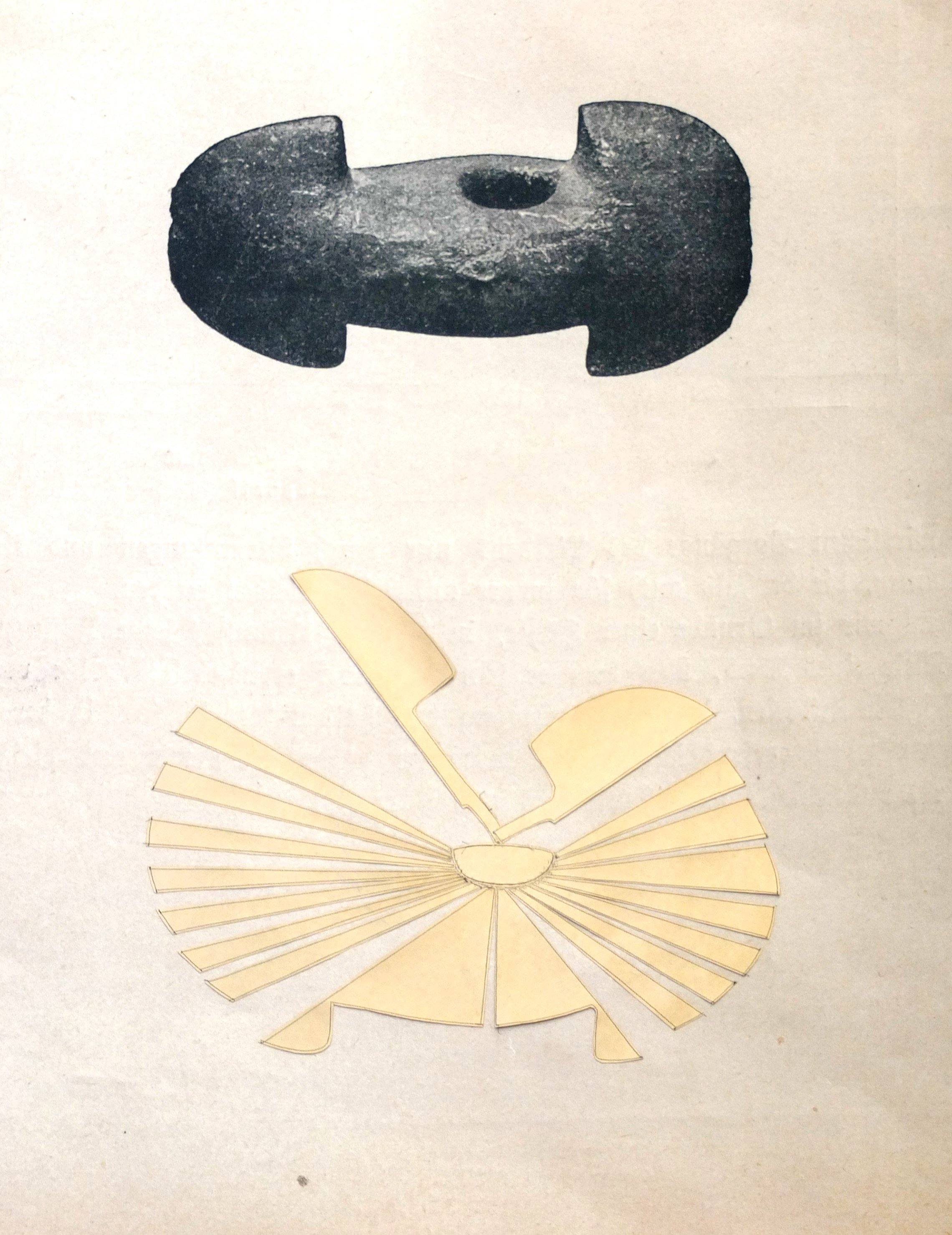
die serie „hammer“ von carmen pfanner entstand in den jahren 2017 bis 2021 und geht zurück auf die abbildung eines objektes aus dem museum für vor- und frühgeschichte in berlin, publiziert in einem buch aus den 1920er jahren. bei dem abgebildeten objekt handelt es sich um einen neolithischen steinhammer (bzw. steinaxt), der den anstoß dafür gab, sich mit seiner archaischen form und den daraus abzuleitenden künstlerischen gestaltungsmöglichkeiten auf textiler basis auseinander zu setzen.
nun ist es so eine sache, eine ableitung zu einer ableitung zu schreiben. vor allem, wenn diese sache ein hammer ist und damit eines der ältesten werkzeuge in der menschheitsgeschichte als ausgangs-punkt für diese serie ausgewählt wurde. eines, das grundlegende voraussetzungen im bereich der materialgewinnung für erste siedlungsformen ermöglichte und damit zur sesshaftwerdung führte. und diese sache ist eine tatsache. eine sache, die das kräftige schreiten zur tat und zum tun über jahrtausende bis heute impliziert.
seit menschengedenken wird der hammer in erster linie mit maskulinen eigenschaften konnotiert. im sinne von härte, stärke und kompromisslosigkeit. doch wenn es nicht um die bodengewinnung und das bauen geht, sondern um das bebauen, um die im neolithikum einsetzende landwirtschaftliche revolution, um die „agri-kultur“, spielt ein weiteres werkzeug eine grundlegende rolle: die sichel. als gegenpol – etwas überspitzt formuliert - zur männlichen brachialität des hammers, ist sie die feine klinge, die die menschheit weiterführt. nicht nur ernährungstechnisch. denn sie führt auch zu den frühesten geweben aus flachs und damit in den textilen bereich, den carmen pfanner seit über 40 jahren zum ausgangspunkt ihrer künstlerischen arbeit macht.
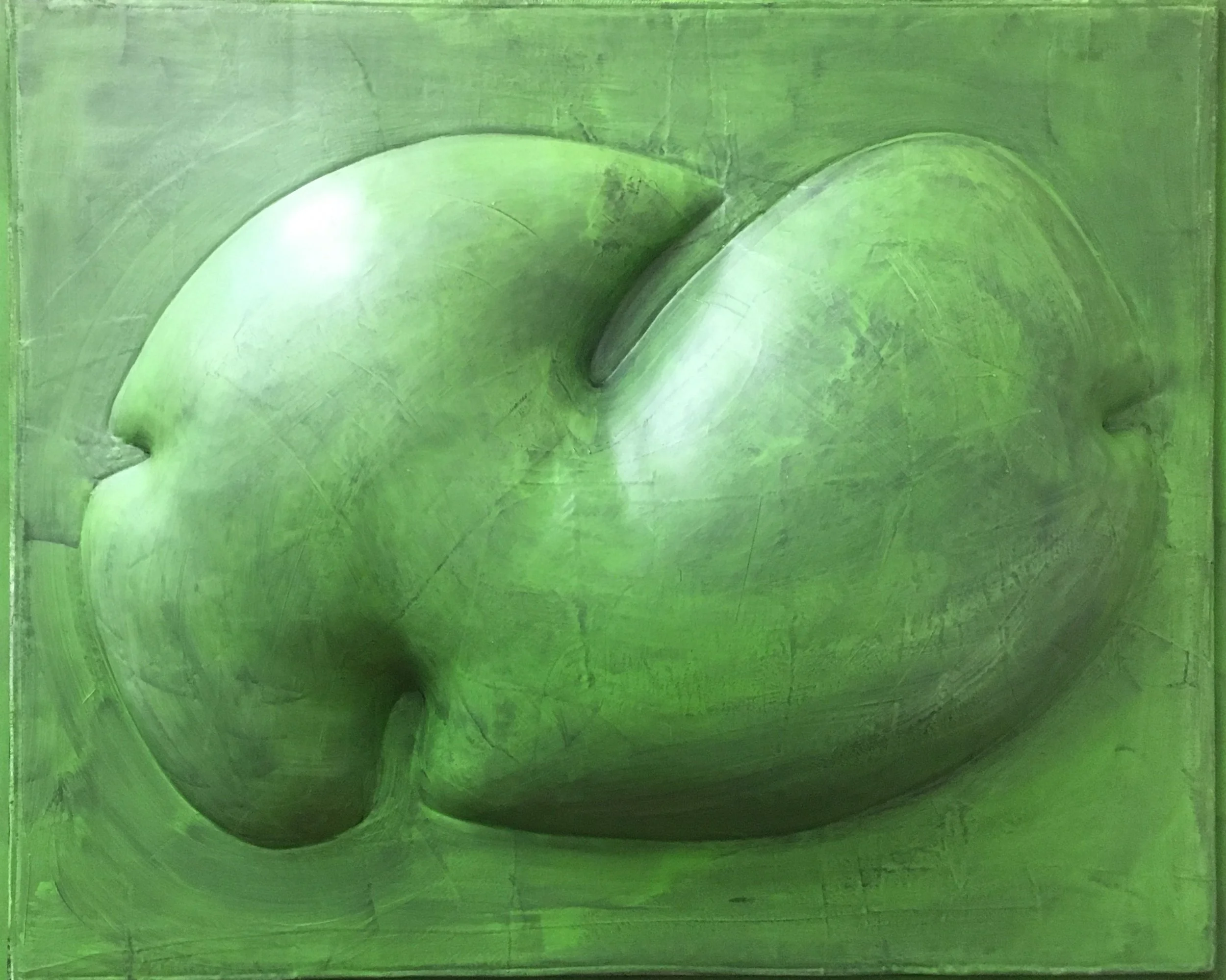
carmen pfanner zerlegt den hammer einfach, eines der unantastbaren geräte seit menschengedenken, dekonstruiert dieses „ur-werkzeug“, baut es neu auf und setzt es in einen völlig neuen, überraschenden kontext. aus stein wird stoff, aus dem exemplarischen abbild eines archaischen werkzeugs wird ein wird ein völlig neues bild. der konzeptionelle ansatz von carmen pfanner transformation führt ein typisch männlich konnotiertes handwerk in ein typisch weiblich konnotiertes handwerk über. dies geschieht mittels eines verfahrens, das sich die technik der schnitt-entwicklung, wie sie im bereich der haute couture und der bekleidungsindustrie üblich ist, zu eigen macht. daraus abgeleitet entstehen rätselhafte, organisch wirkende, dreidimensionale wandarbeiten in unterschiedlichen formaten. die konturen des hammers verschieben sich jeweils mit der platzierung von abnähern, faltungen und einschnitten, womit sie jeweils eine neue form, einen neuen ausdruck erhalten.
der männlich dominierten steinbildhauerei, der mit hammer und fäustel geschaffenen skulptur, setzt carmen pfanner eine weiblich dominierte, aus textilem gewebe geschaffene plastik entgegen. dem klassischen werkzeugprinzip setzt sie einen gegenpol entgegen und bricht damit das „gesetz des instruments“ des amerikanischen philosophen abrahm kaplan, der dies 1964 folgendermaßen umschrieben hat: „geben sie einem kleinen jungen einen hammer, und alles, was ihm unterkommt, muss geschlagen werden.“ ebenso dem daraus abgeleiteten, weit verbreiteten, dem psychologen maslow („maslows hammer“) sinngemäß zugeschriebenen satz: „ich glaube, es ist verlockend, wenn das einzige werkzeug, das man hat, ein hammer ist, alles zu behandeln, als ob es ein nagel wäre.“ dieses postulat gilt schon gar nicht für die kunst und die künstlerin, und schon gar nicht, wenn sie mit dem „blick einer frau“ sich techniken und strategien bedient, die die routine und vertrauten gewohnheiten des alltags bewusst hinter sich lassen. so ist der lauf der dinge: kleine jungs werden
zu großen jungs. und kleine mädchen werden zu großen frauen.
es ist eine der zentralen eigenschaften von kunst, dass sie sich nicht an alltagstauglichen, funktionellen ansprüchen zu orientieren hat. Im gegenteil. eine ihrer zentralen aufgaben ist es, unkonventionelle und ungewöhnliche wege in unseren verschlungenen hirnwindungen zu öffnen. ohne dass wir es unmittelbar begreifen, lässt sie uns erahnen, wohin diese wege führen mögen - bestenfalls in andere sphären unseres sehens und denkens. die von carmen pfanner bewirkte verwandlung von ursprünglich anorganischer materie zu organisch anmutenden gebilden eröffnen eine ganze palette unterschiedlicher assoziationen zur körperlichkeit. auch zur menschlichen. und so ist es geradezu eine stimmige abrundung, dass eines der drei kleinsten knochengebilde unseres körpers der so genannte „hammer“ im mittelohr ist.
wir können es sehen und hören: carmen pfanner flickt mit ihrer arbeit dem werk am zeug.
zum abschluss noch eine kleine anmerkung: carmen pfanner ist aufgewachsen in dornbirn, einem ehemaligen zentrum der textilindustrie. das dornbirner unternehmen f.m. hämmerle war noch mitte der 1980er jahre der größte textilbetrieb österreichs. dass dieses familien-unternehmen ausgerechnet das diminutiv des werkzeugs, von der carmen pfanners werkserie ausgeht, in seinem namen trägt, mag eine amüsante randbemerkung sein. Das firmen-logo sprach jedoch eine andere sprache: die „drei hammer marke“ sollte kraftvoll die internationale bedeutung und die wirtschaftliche potenz des unternehmens über generationen hinweg unterstreichen. dass dieses logo sich martialisch ausschließlich auf die maschinenwelt der produktionsindustrie bezog und nicht auf das produzierte, auf die weithin geschätzten textilien und stoffe, mag bezeichnend sein. carmen pfanner, die die verarbeitung von textilien von der pike auf gelernt hat, betreibt heute in einem ehemaligen kraftwerk eines anderen ehemaligen dornbirner textilbetriebes ihre werkstatt. auch das eine art transformation. sie hat den untergang der dornbirner textilindustrie und die schließung der fabriken vor augen miterlebt. der hammer hatte ausgedient. und so gesehen ist ihre textile künstlerische arbeit - speziell ihre „hammer-serie“ -eine referenz an die dornbirner textilgeschichte, um diese auf einer völlig anderen, individuellen ebene fortzuschreiben.
roland jörg
hammer, stone and fabric
carmen pfanner’s series “hammer” was created between 2017 and 2021 and traces back to the image of an object from the museum of prehistory and early history in berlin, published in a book from the 1920s.
the depicted object is a neolithic stone hammer (or stone axe), which inspired the artist to engage with its archaic form and the artistic possibilities that could be derived from it on a textile basis.
it is no simple matter to write about a derivation of a derivation. especially when that thing is a hammer,
and thus one of the oldest tools in human history was chosen as the starting point for this series. a tool that enabled fundamental advances in the procurement of materials for the first forms of settlement and thus contributed to the transition to a sedentary way of life. and that thing is in fact a fact. a thing that has implied purposeful action and determined activity over thousands of years up to the present day.
since time immemorial, the hammer has primarily been associated with masculine qualities. in the sense of hardness, strength, and uncompromising determination. yet when the issue is not land acquisition and building, but cultivation, not construction but the agricultural revolution that began in the neolithic period,
in other words “agri-culture,” another tool plays a fundamental role: the sickle. as a counterpoint, somewhat exaggeratedly speaking, to the male brute force of the hammer, it is the fine blade that carries humanity forward. not only in terms of nutrition. it also leads to the earliest flax fabrics and thereby into the textile sphere that has formed the basis of carmen pfanner’s artistic work for more than forty years.
carmen pfanner simply takes apart the hammer, one of humanity’s untouchable implements, deconstructs this “primordial tool,” rebuilds it, and places it within an entirely new and surprising context. stone becomes fabric; the exemplary image of an archaic tool becomes an entirely new image. carmen pfanner’s conceptual approach of transformation transfers a craft traditionally coded as male into one traditionally coded as female. this is achieved through a process that adopts the technique of pattern development as commonly used in haute couture and the garment industry. from this emerge enigmatic, organically appearing, three-dimensional wall works of varying formats. the contours of the hammer shift with the placement of darts, folds, and cuts, each time acquiring a new form and a new expression.
to the male-dominated tradition of stone sculpture, the sculpture created with hammer and mallet, carmen pfanner opposes a predominantly female practice: sculptural forms created from textile fabric. she sets a counterpoint to the classical principle of the tool and thereby breaks what the american philosopher abraham kaplan described in 1964 as the “law of the instrument”: “give a small boy a hammer, and he will find that everything he encounters needs pounding.” equally relevant is the widely circulated statement commonly attributed in spirit to the psychologist maslow (“maslow’s hammer”): “i suppose it is tempting, if the only tool you have is a hammer, to treat everything as if it were a nail.” this postulate certainly does not apply to art or to the artist, and even less so when, with the “gaze of a woman,” she employs techniques and strategies that consciously leave behind the routines and familiar habits of everyday life. such is the course of things:
little boys become grown men, and little girls become grown women.
one of the central characteristics of art is that it need not orient itself toward practical or functional demands. quite the contrary. one of its essential tasks is to open unconventional and unusual pathways within the winding structures of our minds. without our immediately grasping it, art allows us to sense where these paths might lead, ideally into other spheres of seeing and thinking. the transformation effected by carmen pfanner, from originally inorganic matter into organically appearing formations, opens up an entire spectrum
of associations with physicality, including the human body. thus it is a fitting conclusion that one of the three smallest bones in the human body is the so-called “hammer,” the malleus of the middle ear.
we can see it and hear it: through her work, carmen pfanner quite literally mends the fabric of what is at hand.
finally, a brief note: carmen pfanner grew up in dornbirn, once a major center of the textile industry. as late as the mid-1980s, the dornbirn company f.m. hämmerle was the largest textile enterprise in austria. the fact that this family business carried in its name precisely the diminutive form of the tool from which carmen pfanner’s series originates may be an amusing side note. the company logo, however, spoke a different language:
the “three hammers” trademark powerfully emphasized the company’s international significance and economic strength across generations. it is perhaps telling that this logo referred exclusively and somewhat martialy to the machinery of industrial production rather than to what was produced, namely the highly regarded textiles and fabrics. carmen pfanner, who learned textile craftsmanship from the ground up, now runs her workshop in a former power plant belonging to another former textile company in dornbirn. that, too, is a kind of transformation. she witnessed firsthand the decline of dornbirn’s textile industry and the closure of its factories. the hammer had served its purpose. viewed in this light, her textile art, and especially her “hammer series,” can be understood as a reference to dornbirn’s textile history, continuing it on a completely different and highly individual level.
roland jörg